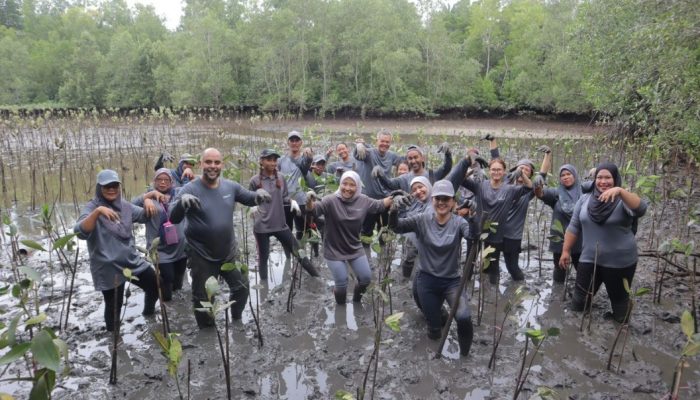

- Activity A: Pioneer project of sustainable land management at Johan Setia, Klang, Selangor
- Activity B: Preparation of agriculture management guideline on peatlands
- To study the sustainable agriculture management and land-use on peatlands in Johan Setia, Selangor;
- To develop a comprehensive guideline on sustainable agriculture management in peatlands through Good Agriculture Practice (GAP); and
- To identify the obstacles and problems as well as recommend improvement measures to the existing agricultural management practices that have been implemented before.

GUIDELINES ON THE MANAGEMENT OF AGRICULTURE ON EXISTING PEATLANDS
(GARIS PANDUAN PENGURUSAN PERTANIAN DI TANAH GAMBUT SEDIA ADA)
The Department of Agriculture (DOA), Malaysia, in collaboration with Global Environment Centre (consultant) and various stakeholders such as government agencies, private sectors, farmers and universities, have developed the Guideline on The Management of Agriculture on Existing Peatlands. This Guideline serves as a reference document for the farmers, DOA and other relevant stakeholders to navigate the challenges of managing agricultural activities on existing peatlands in Malaysia. It outlines recommendations for Good Agricultural Practices (GAP) specific to peatlands, covering topics such as site and crop selection, soil, water, nutrient, waste, disaster and pest management.
By focusing on building the knowledge and capacity of farmers and land managers, the Guideline paves the way for materialising the government’s and DOA’s goal of promoting low-carbon agriculture and zero-burning on peatlands, in alignment with the National Agrofood Policy 2021-2030 (NAP 2.0) and the National Environmental Policy 2002.
To learn more, the Guideline can be accessed through the DOA websites’ Public Resources section HERE

ACTION PLAN FOR PEATLAND MANAGEMENT (AGRICULTURE) IN REDUCING FLOOD AND FIRE DISASTER RISK IN JOHAN SETIA
(PELAN TINDAKAN PENGURUSAN TANAH GAMBUT (PERTANIAN) DALAM MENGURANGKAN RISIKO BENCANA BANJIR DAN KEBAKARAN DI JOHAN SETIA)
The collaborative effort between the Department of Agriculture (DOA), Malaysia, Global Environment Centre (consultant), and various stakeholders including government agencies, private sectors, farmers and universities has produced another policy document, entitled Action Plan for Peatland Management (Agriculture) in Reducing Flood and Fire Disaster Risk in Johan Setia.
Resulting from an extensive 18-month study in Johan Setia, one of the Green Revolution Zones in Selangor, this Action Plan serves as a focused blueprint to guide the farmers, land managers, DOA and land offices to manage this site sustainably against two major disasters endemic to peatlands such as biomass-burning induced haze and flood, which result from unsustainable agricultural operations.
The key issues identified in the Action Plan include land ownership, site management, hydrology management, disaster response and the importance of collaboration and integrated management. Each action item was identified with specific targets, implementation timelines and responsible agencies to ensure effective execution to prevent fires and floods, enhance crop production and reduce the environmental impact of agriculture on the climate.
For further reading, the Action Plan can be retrieved from the DOA websites’ Public Resources section HERE