
RIAU, Indonesia, July 13, 2026– From July 6 – 9, 2026, more than 250 participants joined forces to plant 800 mangrove trees across four villages in Riau Province: Tanjung Kuras in Siak Regency, and Kelapa Pati, Buruk Bakul, and Sepahat in Bengkalis Regency. The four-day planting event saw participation from local community groups, students, village and district representatives, women’s groups and student associations.
This milestone is part of a collaborative effort between Yayasan Gambut (YG) and the Global Environment Centre (GEC), with support from Aramco Asia Singapore (Aramco). Under the multi-year Community-Based Mangrove Rehabilitation Program, the initiative reflects the partners’ efforts towards coastal ecosystem restoration and community empowerment.
This effort builds on two previous successful phases, during which more than 24,000 mangrove trees were planted, 200 meters of nature-based wave breakers constructed, and two community nurseries were established in Buruk Bakul and Kelapa Pati. Phase 3 (2025-2026) expands the program to its largest scale yet, aiming to rehabilitate up to nine hectares of degraded coastal habitat by planting 18,000 mangrove trees. To date, more than 16,900 trees have been planted, with the remaining scheduled for completion by the end of 2026.
“This program has transformed how communities view mangroves — not just as trees, but as guardians of their coastlines, livelihoods and futures. Every sapling planted today represents a commitment by the community to protect what is theirs,” said Mulyadi S.P., Director of Yayasan Gambut.
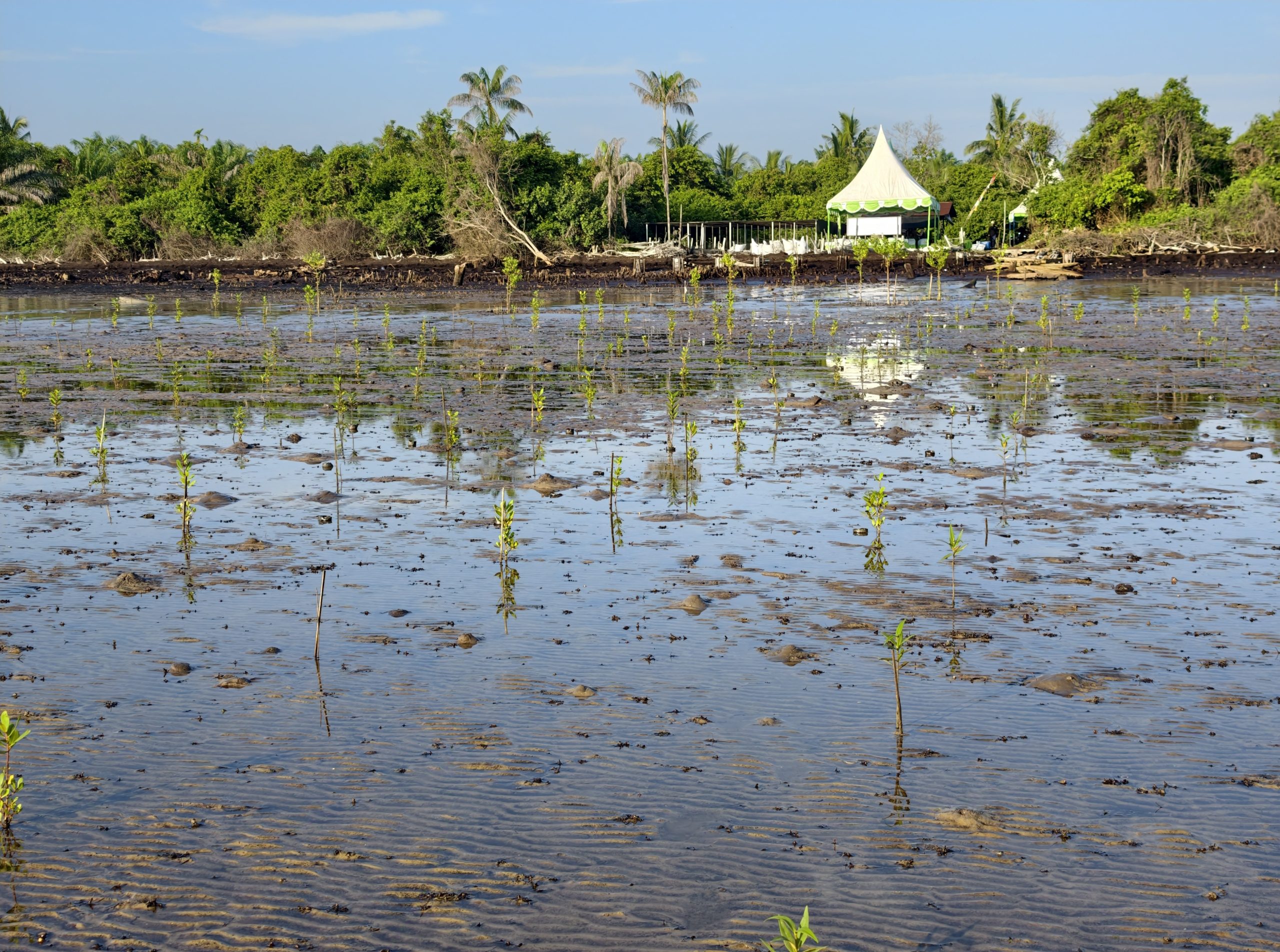
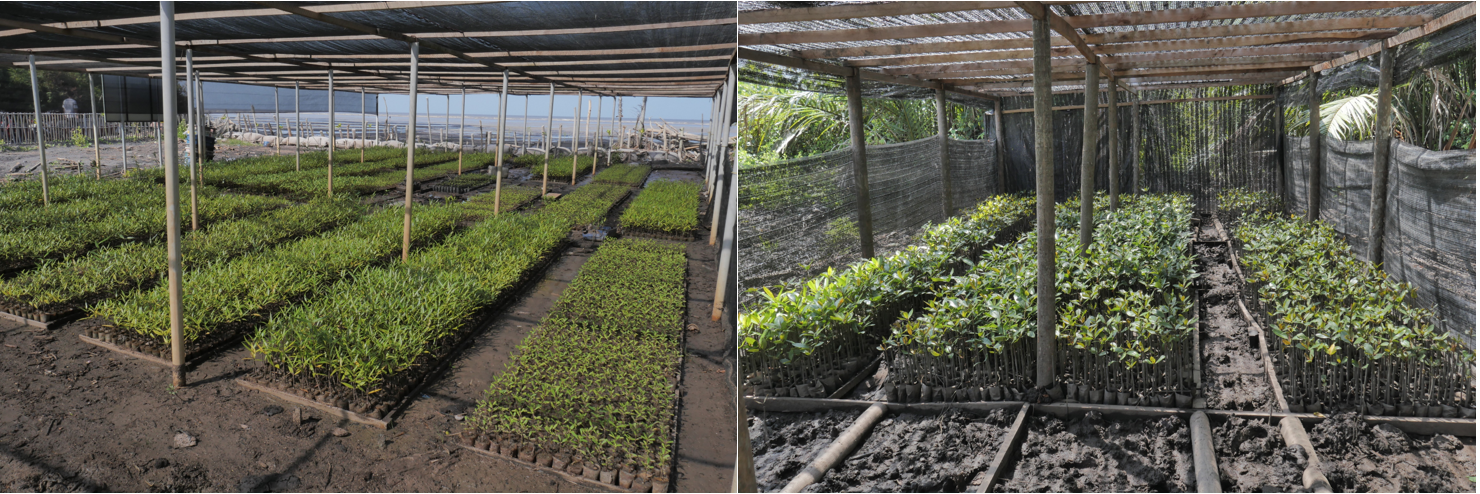
Local community groups have taken active ownership of the project’s success. Groups including the Sekat Bakau Group in Buruk Bakul, the Paghet Segagah Group in Kelapa Pati, the KTH Sepahat Hijau Group in Sepahat, and the Belatram Group in Tanjung Kuras are leading nursery operations, patrolling, site monitoring, and adaptive replanting, aiming to ensure long-term tree survival. Two new community nurseries are now fully operational in Sepahat and Tanjung Kuras, while an additional 100 meters of nature-based wave breakers have been completed in Kelapa Pati. A cross-border peer learning visit to Malaysia has helped further strengthen community capabilities in nursery management, restoration techniques and mangrove-based livelihoods.
Recent field monitoring indicates strong seedling survival rates across all sites. Buruk Bakul and Tanjung Kuras both reported 100 percent survival rates, a testament to the stewardship of the local residents.
“GEC is proud of what this partnership has achieved over three phases. From one village to four, from a pilot to a proven model, this program demonstrates that community-based mangrove restoration works—and that it works best when local people are true partners in every step of the process,” said Faizal Parish, Director of GEC.
Upon completion in late 2026, the program will have rehabilitated approximately 13 hectares of degraded coastline and planted more than 42,000 mangrove trees across all three phases. It helped community members across Bengkalis and Siak Regencies to become active stewards of their coastal environment.
“Aramco’s continued support for this program highlights the value of integrating environmental restoration with community participation,” said Ayman M. Hoho, Managing Director of Aramco Asia Singapore. “In Riau, we are beginning to see tangible results from the first two phases of the program—healthier mangroves, more engaged communities, and measurable coastal recovery—which demonstrate the kind of impact we aim to deliver.”
YG, GEC, and Aramco’s objective is to ensure the longevity of restored ecosystems through continued community monitoring, maintenance and adaptive management.
END